CYCLE 2
GETTING STARTED IN CLASS
MANAGING THE CLASS IN SPANISH
A good place to start is to learn how to manage the first few class hours with your teacher. In this way, you can use Spanish right from the start. (Your teacher will help you with this.)
Opening Conversations
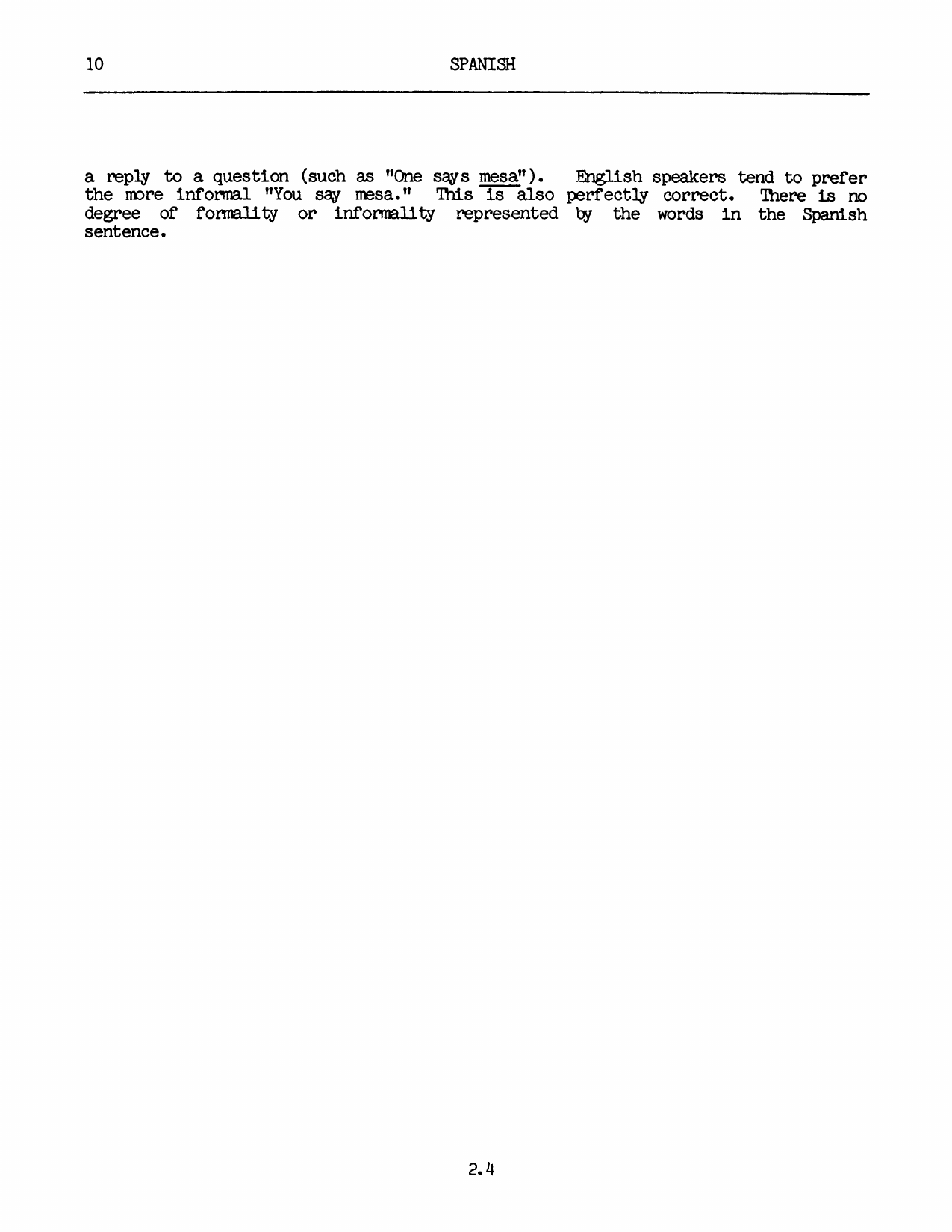
This is probably the greeting that you will use in the morning:
More than likely, your teacher will want to know your name:
You may want to address your teacher this way:
Following is a sample conversation:
Getting Help
If you do not understand something, you can stop your teacher and get some help by simply saying:
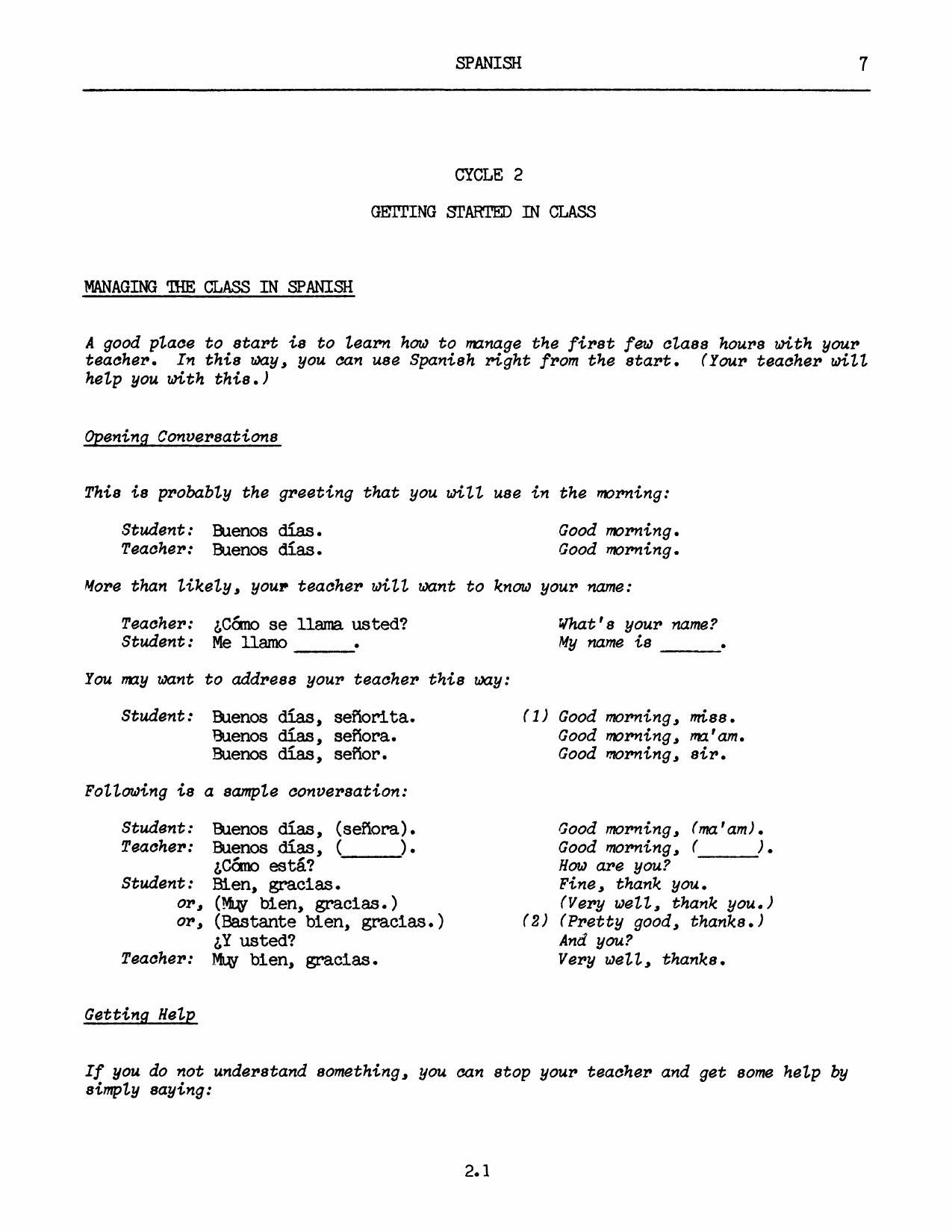
You may want to expand this into:
For example, if you want to ask how to say "pen" in Spanish, hold a pen in your hand and say:
If you didn't hear or if you want it repeated, say:
If you want to ask how to say something in Spanish:
If you want to have some fun by "showing off" with a longer sentence, you can say something like this:
español?
Useful Phrases
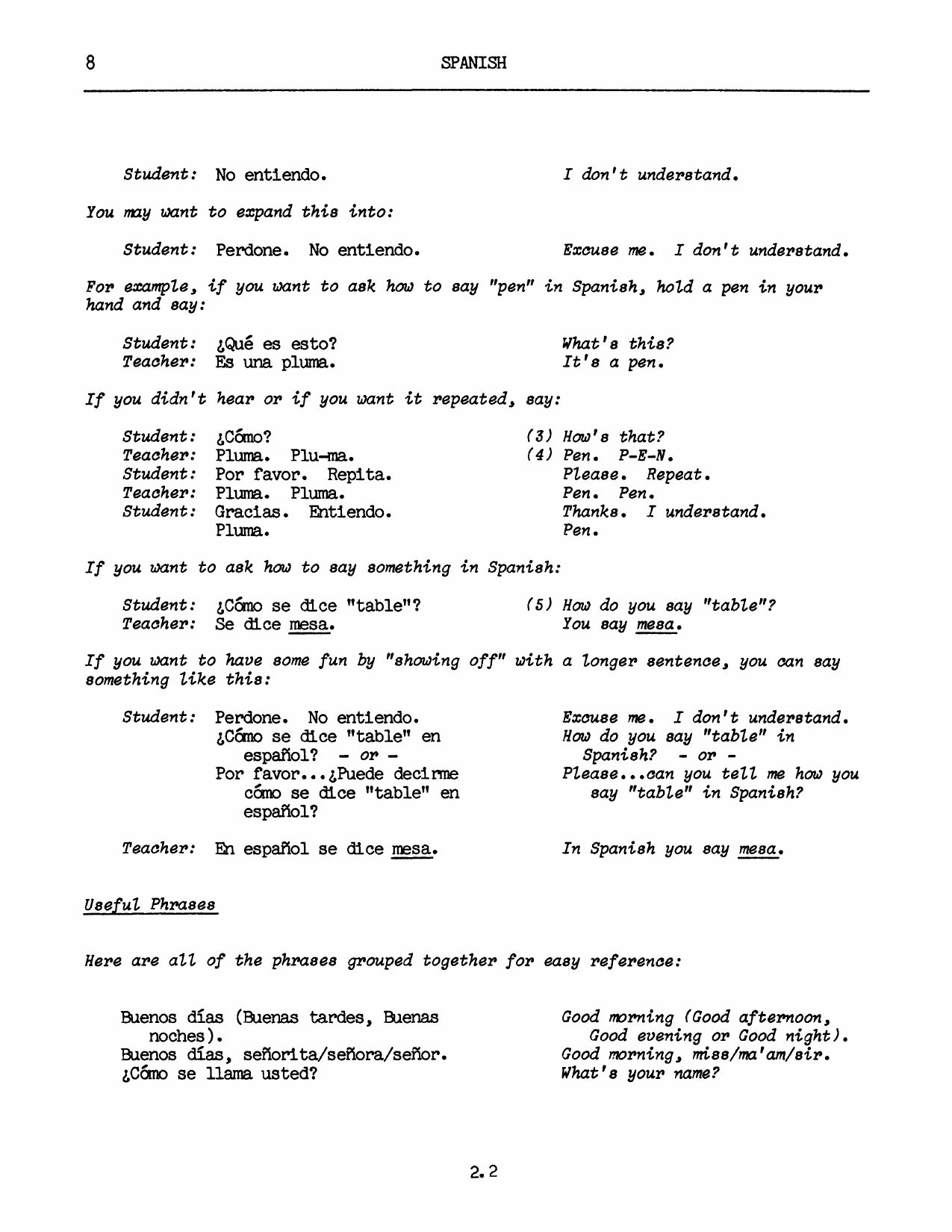
Here are all of the phrases grouped together for easy reference:
well, thanks.)
As your vocabulary grows with practice, you will want to add other words and phrases to this list.
Language Notes
1. Using the word señorita (or señora or señor) is more courteous and adds a
little warmth to your greeting. Therefore, it's a good idea to cultivate its use.
2. Although the English translation may sound somewhat colloquial, the
Spanish is not to be interpreted as colloquial, but simply as informal. This is what we tried to achieve ty using the term "pretty good."
3. Again, the English translation may seem too informal; nevertheless, the
Spanish is neither "too informal" nor "too polite," but is somewhere in between. If "How's that?" bothers you, you can use "Beg your pardon?" instead.
4, Unlike English speakers, Spanish-speaking people are not accustomed to
spelling words. This is probably due to the fact that since the spelling system is so up-to-date and modern, Spanish speakers do not need to clarify words through spelling. However, when someone has difficulty understanding something, they resort to pronouncing the word by syllables instead of spelling it out.
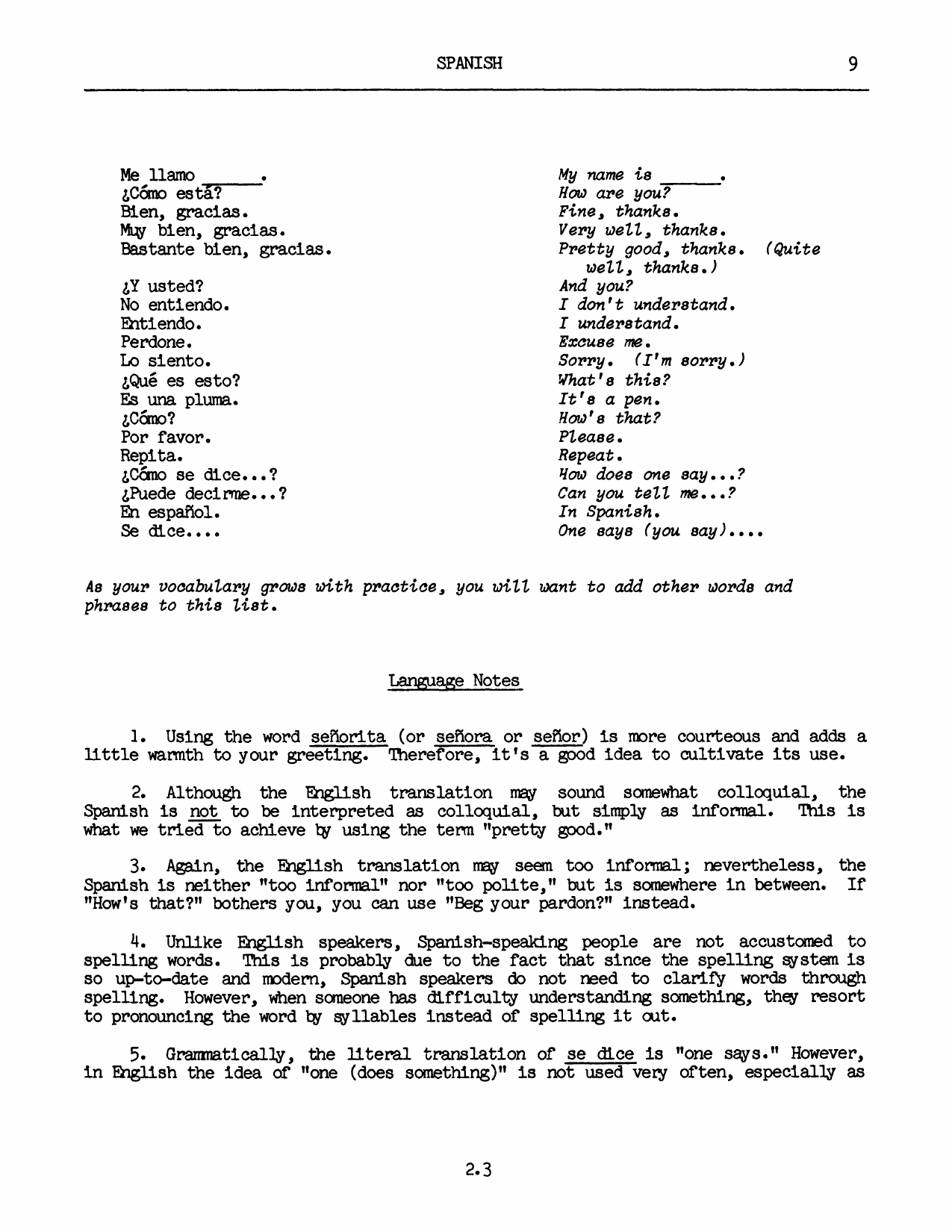
5. Grammatically, the literal translation of se dice is "one says." However,
in English the idea of "one (does something)" is not used very often, especially as
a reply to a question (such as "One says mesa"). English speakers tend to prefer the more informal "You say mesa." This is also perfectly correct. There is no degree of formality or informality represented by the words in the Spanish sentence.